
Education Strategic Advisory Practice

One console for the pipelines, the lineage and the people on call.

Northlane runs on top of the warehouse you already own. Model the transforms, watch every table and prove where a number came from — without a second scheduler, an agent on a host or a copy of your data.

  • Read-only connection
  • 180+ connectors
  • SOC 2 Type II
northlane / console
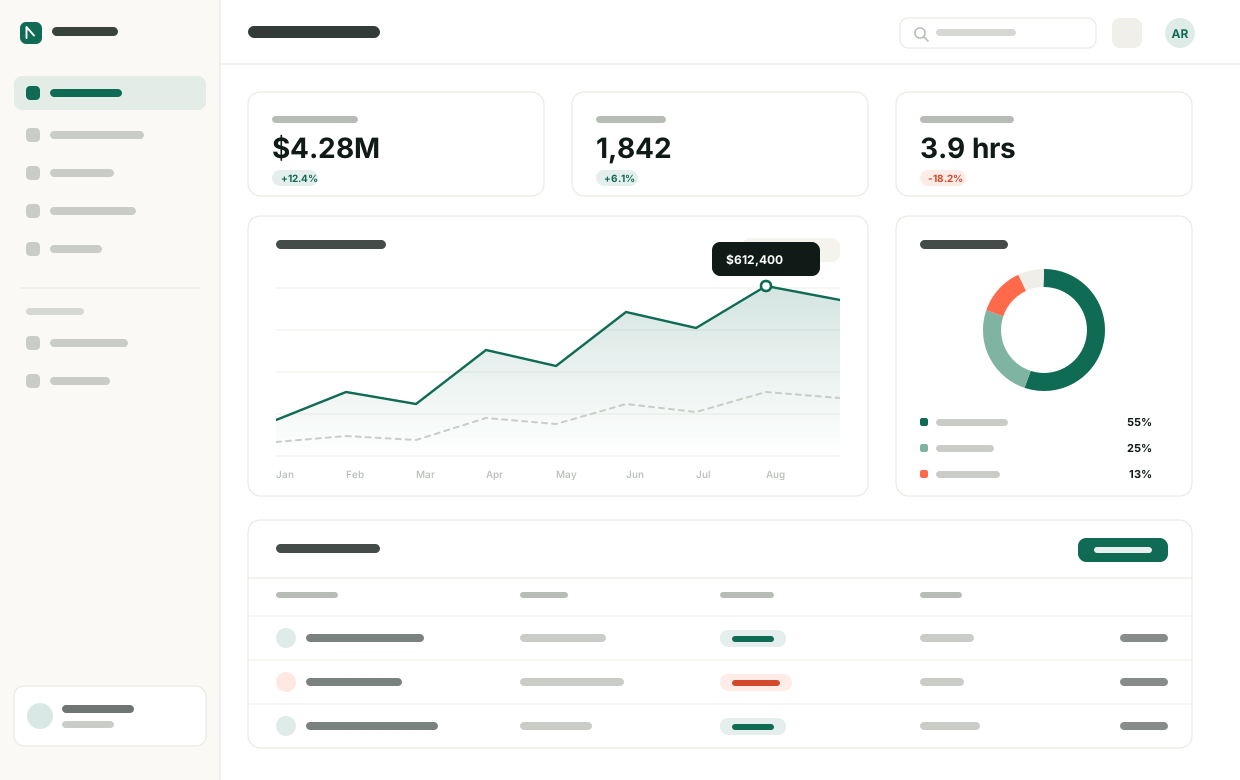
The Northlane console with pipeline health, column lineage and open incidents side by side

One control plane

Three tools, one graph, and nothing left to reconcile by hand

Most teams arrive with an orchestrator, a testing framework and a catalogue that all disagree about what exists. Northlane reads the warehouse query history once and builds a single graph the three of them share — so a schema change, a failed run and a stale dashboard become one event with one owner instead of three tickets.

  • Model, run and watch on the same objects Transforms, schedules, tests and freshness contracts attach to the table itself, not to three separate repositories.
  • Metadata only, never your rows Schemas, query logs and row counts are read over a role you create and can revoke. Column values stay in the warehouse.
  • One declared owner per table Ownership is stated once, and every alert, access request and audit line resolves against it.
northlane / console / revenue-core
The Northlane console showing a pipeline run beside its column lineage and the dashboards downstream

Platform pillars

Six systems that used to be six vendors

Every pillar reads from the same lineage graph, so a change in one is visible in the other five before anyone opens a ticket.

Inside the product

Three surfaces an evaluator always asks to see

Pick a surface. Each panel shows the view your team would actually work in, and names the thing it replaces.

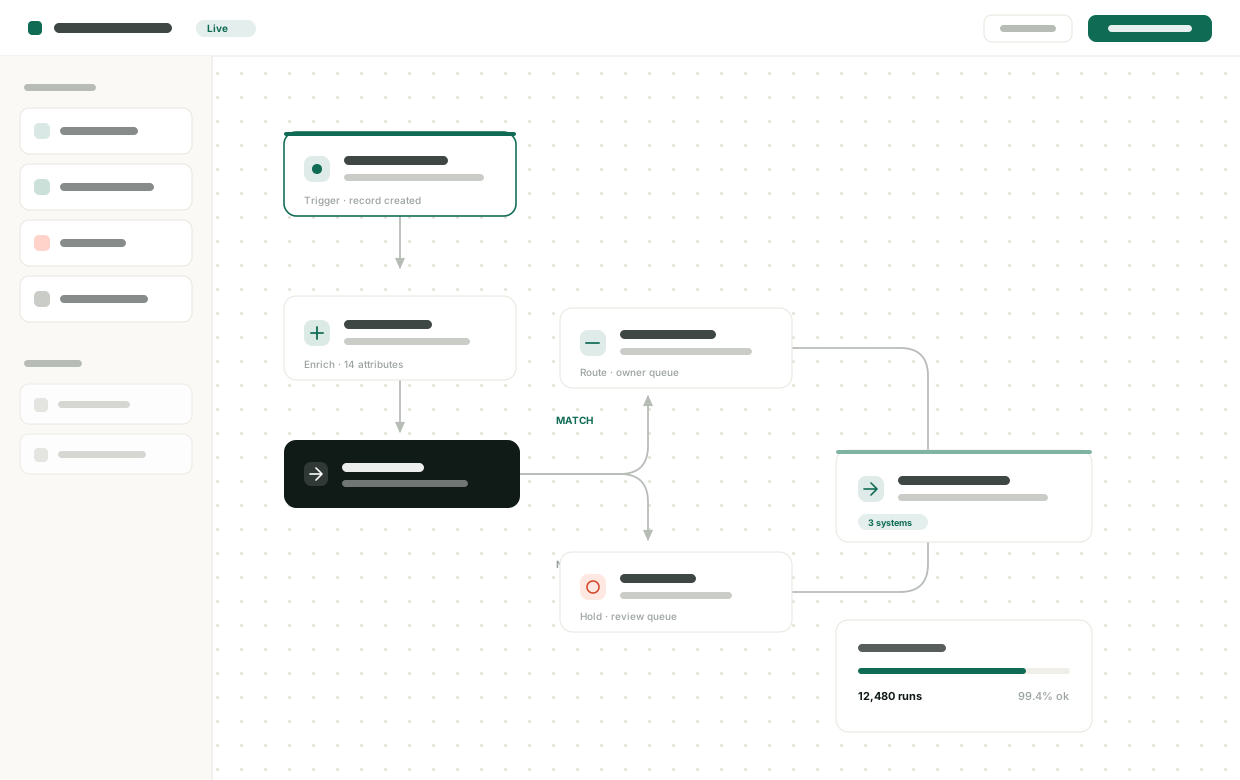
Build the pipeline where you can see all of it

Every transform is a node carrying its inputs, its owner and its last run. Drop into SQL on any node without leaving the graph, and diff the change against last night's snapshot before it merges.
  • Git-backed history with a readable diff on every node
  • Dry runs execute on your compute against yesterday's snapshot
  • Dev to staging to production without rewriting a connection string
The Northlane pipeline canvas with versioned transform nodes and an open SQL editor

How work moves

What happens to a pipeline change between commit and dashboard

The same four stages run for every model, whether it was edited on the canvas or opened as a pull request.

  1. Propose

    A change opens as a diff against the live graph. Northlane names the columns it touches and lists the models, dashboards and reverse-ETL syncs sitting downstream of them.

    Minutes

  2. Dry run

    The new logic runs against last night's snapshot on your own compute. Row counts, null rates and distributions are compared with the current version before anything merges.

    Automatic

  3. Promote

    Merging moves dev to staging to production without rewriting a connection string. Each promotion records the approver, the diff and the run that cleared it.

    One command

  4. Watch

    Freshness and volume contracts attach to the new version immediately. A breach pages the table's owner with the failing column and the blast radius already resolved.

    Continuous

Platform impact

What changes once one graph owns the pipelines

Each figure is measured on production workloads after cutover and reported by the customer's own platform team.

  • 71 %

    Fewer pipeline incidents

    Failed production runs in the first quarter after cutover, against the 90 days before it.

    48 accounts · platform telemetry

  • 11

    Days to the first governed pipeline

    From read-only credential to a table running under an enforced freshness contract.

    Median, 2025 deployments

  • $ 3.8 M

    Warehouse spend recovered

    Idle compute and duplicate models retired inside the first year on the platform.

    Median enterprise account, FY25

  • 99.98 %

    Freshness SLA held

    Across 12,400 monitored production tables in customer accounts.

    Rolling 12-month average

Connected systems

The console reads the stack you already run

Eight of the 180 maintained connectors. Each is versioned with the platform and covered by the same uptime commitment.

Native

Lakeframe

Open table format on object storage, with incremental merges and partition pruning read from the catalogue.

Warehouses and lakes View connector Lakeframe
Beta

Parallax DB

Distributed MPP reads with per-query cost attribution written back to the workspace ledger.

Warehouses and lakes View connector Parallax DB
Native

Pipeline OS

Deal, activity and quota objects mapped to your revenue model and refreshed on a five-minute cadence.

Native

Eventgate

Schema-registry-aware consumers with exactly-once delivery into any warehouse table you nominate.

Chartroom

Model-level freshness and upstream lineage surfaced beside every published chart and saved view.

In production

Three platform teams on what the console replaced

Each quote comes from a named engineer running Northlane on production workloads, with the figure they reported beside it.

We retired the scheduler, the test runner and the catalogue in one quarter. Northlane did not add a tool to the stack, it removed two of them.

3 to 1 tools consolidated into one console

Priya Raghavan

Priya Raghavan

VP Data Platform · Halden Systems

Read the Halden Systems story

Every schema change now arrives with the list of dashboards it will break. Nobody guesses, and nobody ships a rename on a Friday any more.

1,400 models under lineage in nine days

Marcus Feld

Marcus Feld

Director of Analytics Engineering · Ardent Labs

Read the Ardent story

Analysts used to raise a ticket to ask whether a dashboard was fresh. That question has not been asked here since March.

6 hrs of triage returned to the team weekly

Dana Okonkwo

Dana Okonkwo

Head of Revenue Operations · Corvane

Read the Corvane story

Where teams start

Four routes into the platform

Most teams adopt one surface first and pull the rest in once the graph is populated. These are the four entry points we see most often.

Next step

See the console against your own warehouse

A solutions engineer connects a read-only role during the call and maps lineage across your real tables. You keep the map whether or not you buy.

Read-only access, revocable by you. No agents, no copies of your data.