---
title: Why McCloudCo | Independent IT Advisory & Governance
description: Discover why mid-market leaders choose mccloudCo for vendor-neutral IT strategy, predictable fixed-rate retainers, and fractional vCIO leadership.
---
[Skip to main content](https://www.mccloudco.com/why-us#main-content)
[ ](https://www.mccloudco.com/b2b-ai/home?hsLang=en)
- Capabilities
Capabilities
- [Optimization & efficiency Eliminate tech waste and automate workflows.](https://www.mccloudco.com/foundation-efficiency?hsLang=en)
- [Modernization & scale Modernize core systems for scalable growth.](https://www.mccloudco.com/?hsLang=en)
- [Leadership & governance Fractional vCIO leadership and compliance assurance.](https://www.mccloudco.com/?hsLang=en)
How we work
- [Retainer ladder Five tiers, from cost cleanup to compliance & secure AI](https://www.mccloudco.com/features?hsLang=en)
- [Beyond the retainer Beyond the Retainer — Coaching, governance, enrollment, and technology services](https://www.mccloudco.com/?hsLang=en)
- [Who we serve Professional services, healthcare, manufacturing, and more](https://www.mccloudco.com/integrations?hsLang=en)
Get started
Not sure which practice fits?
A no-cost consultation — we'll recommend a starting point, or tell you honestly if now isn't the time.
[Book a discovery call](https://www.mccloudco.com/request-demo?hsLang=en)
- Solutions
By team
- [Data engineering](https://www.mccloudco.com/solutions/data-engineering?hsLang=en)
- [Analytics & BI](https://www.mccloudco.com/solutions/analytics?hsLang=en)
- [Revenue operations](https://www.mccloudco.com/solutions/revops?hsLang=en)
- [Security & compliance](https://www.mccloudco.com/solutions/compliance?hsLang=en)
- [Concierge](https://www.mccloudco.com/client-concierge?hsLang=en)
- Resources
Learn
- [Resource library](https://www.mccloudco.com/resources?hsLang=en)
- [Blog](https://www.mccloudco.com/blog?hsLang=en)
- [Guides](https://www.mccloudco.com/resources/guides?hsLang=en)
- [Webinars](https://www.mccloudco.com/resources/webinars?hsLang=en)
- About
About
- [Company overview Two practices, one advisory model.](https://www.mccloudco.com/about-us?hsLang=en)
- [What we do Two practices, one advisory model.](https://www.mccloudco.com/what-we-do?hsLang=en)
- [What we believe Decisions we hold to, not a mission statement.](https://www.mccloudco.com/what-we-believe?hsLang=en)
- [Why mccloudCo Decisions we hold to, not a mission statement.](https://www.mccloudco.com/why-us?hsLang=en)
How we work
- [Retainer ladder Five tiers, from cost cleanup to compliance & secure AI](https://www.mccloudco.com/features?hsLang=en)
- [Beyond the retainer Beyond the Retainer — Coaching, governance, enrollment, and technology services](https://www.mccloudco.com/?hsLang=en)
- [Who we serve Professional services, healthcare, manufacturing, and more](https://www.mccloudco.com/integrations?hsLang=en)
Engage with us
Have a question, or ready to talk?
Whatever you're holding — a question about fit, a specific practice, or just curiosity — Contact has every way to reach us in one place.
[Get in touch](https://www.mccloudco.com/contact-us?hsLang=en)
[Sign in](https://app.example.com/login) [Book a discovery call](https://www.mccloudco.com/schedule-discovery-call?hsLang=en)
Open menu
- Capabilities
- [Optimization & efficiency](https://www.mccloudco.com/foundation-efficiency?hsLang=en)
- [Modernization & scale](https://www.mccloudco.com/?hsLang=en)
- [Leadership & governance](https://www.mccloudco.com/?hsLang=en)
- [Retainer ladder](https://www.mccloudco.com/features?hsLang=en)
- [Beyond the retainer](https://www.mccloudco.com/?hsLang=en)
- [Who we serve](https://www.mccloudco.com/integrations?hsLang=en)
- [View all Capabilities →](https://www.mccloudco.com/capabilities?hsLang=en)
- Solutions
- [Data engineering](https://www.mccloudco.com/solutions/data-engineering?hsLang=en)
- [Analytics & BI](https://www.mccloudco.com/solutions/analytics?hsLang=en)
- [Revenue operations](https://www.mccloudco.com/solutions/revops?hsLang=en)
- [Security & compliance](https://www.mccloudco.com/solutions/compliance?hsLang=en)
- [View all Solutions →](https://www.mccloudco.com/solutions?hsLang=en)
- [Concierge](https://www.mccloudco.com/client-concierge?hsLang=en)
- Resources
- [Resource library](https://www.mccloudco.com/resources?hsLang=en)
- [Blog](https://www.mccloudco.com/blog?hsLang=en)
- [Guides](https://www.mccloudco.com/resources/guides?hsLang=en)
- [Webinars](https://www.mccloudco.com/resources/webinars?hsLang=en)
- [View all Resources →](https://www.mccloudco.com/resources?hsLang=en)
- About
- [Company overview](https://www.mccloudco.com/about-us?hsLang=en)
- [What we do](https://www.mccloudco.com/what-we-do?hsLang=en)
- [What we believe](https://www.mccloudco.com/what-we-believe?hsLang=en)
- [Why mccloudCo](https://www.mccloudco.com/why-us?hsLang=en)
- [Retainer ladder](https://www.mccloudco.com/features?hsLang=en)
- [Beyond the retainer](https://www.mccloudco.com/?hsLang=en)
- [Who we serve](https://www.mccloudco.com/integrations?hsLang=en)
- [View all About →](https://www.mccloudco.com/about-us?hsLang=en)
[Book a discovery call](https://www.mccloudco.com/schedule-discovery-call?hsLang=en)
[Sign in](https://app.example.com/login)
[](https://www.mccloudco.com/b2b-ai/home?hsLang=en)
Menu
[Book a discovery call](https://www.mccloudco.com/schedule-discovery-call?hsLang=en)
Why mccloudCo
# Independent strategic governance engineered for the mid-market
We give growing businesses the clarity, executive leadership, and technical oversight of an enterprise consulting firm—without the overhead, bias, or unpredictable billing.
[Schedule a discovery call](https://www.mccloudco.com/b2b-ai/careers?hsLang=en) [See how an engagement begins](https://www.mccloudco.com/b2b-ai/resource-library?hsLang=en)
McCloudCo bridges the gap between reactive IT support and costly enterprise consulting practices. Operating as an independent, vendor-neutral ally, our productized 5-tier framework eliminates software waste, automates manual workflows, and establishes predictable cost discipline tailored to your exact operational scale.
Beyond baseline efficiency, we deliver executive vCIO leadership, cloud transformation oversight, and regulatory compliance readiness (SOC 2, HIPAA, CMMC). We embed directly into your leadership table to govern multi-year IT budgets, manage vendor SLAs, and protect your business with secure AI guardrails.
The mccloudCo difference
## Unbiased strategy meets predictable mid-market execution
How our independent advisory practice delivers true client advocacy, transparent pricing, and executive governance without vendor commissions or enterprise bloat.
### 100% vendor-neutral independence
Unlike traditional MSPs, we do not markup hardware, resell software, or accept vendor kickbacks. Our recommendations are driven entirely by what protects your budget and advances your business goals.
### Predictable fixed-rate monthly retainers
No unpredictable billable hours or surprise invoices. Every engagement operates on a clear, tiered monthly retainer ($1,500 to $9,500/mo) with guaranteed advisory capacity and defined deliverables.
### Fractional vCIO leadership
Get executive technology leadership, multi-year financial roadmaps, and board-level representation at a fraction of the cost of a full-time Chief Information Officer.
### Productized maturity framework
Our structured 5-tier roadmap meets you at your exact stage of growth—from early cost containment and workflow automation to cloud migrations and enterprise regulatory assurance.
### Practical governance & AI safeguards
We don't just write theoretical strategy documents—we deliver actionable governance. From establishing SOC 2/HIPAA audit readiness to instituting secure corporate AI acceptable-use policies and disaster recovery playbooks, we turn complex regulatory and technical risks into concrete operational safeguards.
### Strict vendor accountability
We act as your official client representative—managing your existing IT providers, auditing SLAs, and ensuring third-party technical projects deliver on time and on budget.
[Read how an engagement begins](https://www.mccloudco.com/resources/guides?hsLang=en)
Put all six to the test during your no-cost discovery call. We'll help you find the ones that don't apply to you.
Client perspective
## Why mid-market leaders choose mccloudCo
From fast-growing regional businesses to established mid-market enterprises, leadership teams partner with us to transform complex technology from a source of friction into an engine for growth.
- Elimination of strategic guesswork Executive teams gain a clear, multi-year technology roadmap aligned directly with business valuation goals, replacing reactive decision-making with deliberate, structured CapEx/OpEx planning.
- Complete vendor neutrality Clients trust that every architecture decision, software selection, and procurement recommendation is 100% objective—free from hidden reseller markups, commissions, or vendor quotas.
- Enterprise capability on mid-market budgets Organizations secure the expertise of senior CIOs, cloud architects, and risk specialists at a fraction of the cost of full-time executive hires or big-four management consulting firms.
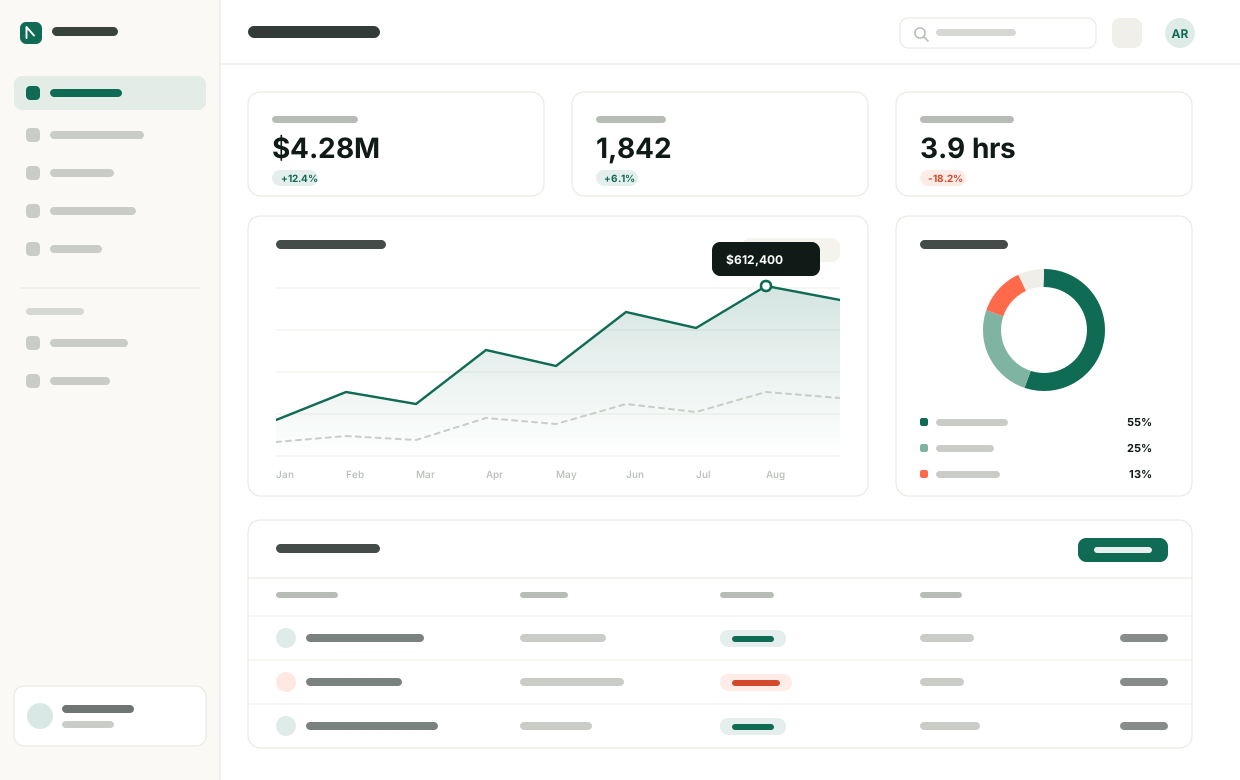
[Book a demo](https://www.mccloudco.com/b2b-ai/request-a-demo?hsLang=en) [Read the lineage docs](https://www.mccloudco.com/b2b-ai/product-detail?hsLang=en)
northlane.app / lineage
[](https://www.mccloudco.com/b2b-ai/home?hsLang=en)
Senior advisory leadership for the schools and businesses that need it — without the cost of a full-time executive hire. One firm, two practices, one advisory model.
- Huntsville, AL
- Atlanta, GA
-
-
Capabilities
- [Overview](https://www.mccloudco.com/capabilities?hsLang=en)
- [Optimization & efficiency](https://www.mccloudco.com/foundation-efficiency?hsLang=en)
- [Modernization & scale](https://www.mccloudco.com/transformation-scale?hsLang=en)
- [Leadership & governance](https://www.mccloudco.com/leadership-assurance?hsLang=en)
Strategic Advisory
- [Overview](https://www.mccloudco.com/strategic-advisory-overview?hsLang=en)
Resources
- [Client concierge](https://www.mccloudco.com/client-concierge?hsLang=en)
- [Resource library](https://www.mccloudco.com/resource-library?hsLang=en)
- [FAQ](https://www.mccloudco.com/faq?hsLang=en)
Company
- [Company overview](https://www.mccloudco.com/about-us?hsLang=en)
- [What we do](https://www.mccloudco.com/what-we-do?hsLang=en)
- [What we believe](https://www.mccloudco.com/what-we-believe?hsLang=en)
- [Why mccloudCo](https://www.mccloudco.com/why-us?hsLang=en)
- [Engage with us](https://www.mccloudco.com/contact-us?hsLang=en)
The operations brief
One practical email a month on data reliability. No product news filler.
© 2026 mccloudCo All rights reserved.
- [Privacy](https://www.mccloudco.com/privacy-policy?hsLang=en)
- [Terms of service](https://www.mccloudco.com/terms-services?hsLang=en)